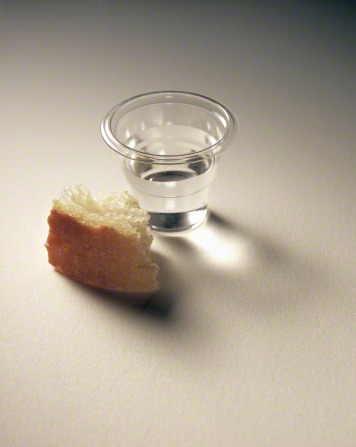
- *There were three kinds of sacrifice under the Law of Moses, and an order by which they were carried out. These are outlined as follows with regard to sin. When one committed a sin, they would follow the steps outlined below. But first, it is important to understand that food and the eating of it represents a feeling of being satisfied. The consuming of sacrifices whether by eating or burning representing the satisfying of the demands of justice.
- The Chatat חטאת. An animal was killed upon the altar and divided two ways. The first half was for the priest and his family and represented becoming reconciled with the church, and with the Savior (represented by the priest). The second half was consumed on the altar, and went up in smoke, symbolically going up to God. Scriptures often refer to the sweet savor, or smell, etc, that a burnt offering was to God.
- The Olah עֹלָה. (The one God asked Abraham to perform with Isaac) The animal is slaughtered, divided, washed, annointed, and burned completely. This sacrifice belonged entirely to God. The entire aspect of this sacrifice represents the total consecration necessary to satisfy God, and fully repent.
- The Shalom. An animal is slaughtered and divided 3 ways; The first was eaten by the offender; the 2nd by the priest, and the 3rd was consumed by God. This three way participation represents oneness and unity that follows true repentance among the offender, the priest (the church/Christ), and God.
- *Genesis 22:16 - Grammatical mistranslations: Extra emphasis on the me/I pronoun. Should be translated more like "I am swearing to myself...". Then there were many words and Direct Object Markers that created repetition and emphasis. The message in Hebrew that was lost in English was "This Covenant is a DONE DEAL, absolutely, completely, wholly."
- *Once again, the covenant with Abraham involved the following: 1) A city (the worldwide Zion that is yet to be built) 2) Become a God and have endless posterity, and so will his children 3) Priesthood/ordinances/covenant marriage ordinance of exaltation.
- The Hebrew Letter צ (Tsade) makes the "ts" sound we hear in "Nuts". Since there is no English equivalent letter, bible translations appear with "Z's", or "S's". This explains the sometimes different spelling for the word "Zion", which is sometimes rendered "Sion". Pronounced properly would be "Tsion".
- Hebrew is a gender language. Words ending with a "im" sound are male plural. Words ending in a "oath" or "oat" sound are feminine plural.
- Cherub-im (Angels, plural); Seraph-im (Burning ones (angels), plural); Eloh-im (Gods, plural; This is NOT the name of Deity as we sometimes suppose, but a title)
- Remember when Solomon went after the false gods of "Baalim" (Male plural) and "Ashtoroth" (Female plural)? (Notice the plural male and female forms of deity, though false gods in this case.
- Hebrew Conjunctions: In English it is improper to begin sentences with a conjugation (like And, But, Therefore, etc), but it was totally legit in Hebrew. Look at any Book of Mormon or Bible passage and nearly every sentence begins with a conjunction. This is "Bad English, but good Hebrew". AND it came to pass... (And's are represented by the single Hebrew letter, ו Vav). Incidentally, "And it came to pass" looks like this: וַיְהִי (pronounced "Vaihee").